 Himeji Castle Ticket
The Best Time to Visit Himeji Castle, Month by Month
The best time to visit Himeji Castle matters more than at most castles: the route is exposed gravel, the keep is un-air-conditioned, and the crowd calendar has two absolute peaks. Himeji Castle rewards timing more than most castles: the route is exposed gravel, the keep is un-air-conditioned, and the crowd calendar has two absolute peaks. This guide splits the year honestly - weather, crowds, and the dates that change everything - then matches each season to the ticket approach that suits it. For the castle itself, the ticket comparison is the companion piece.
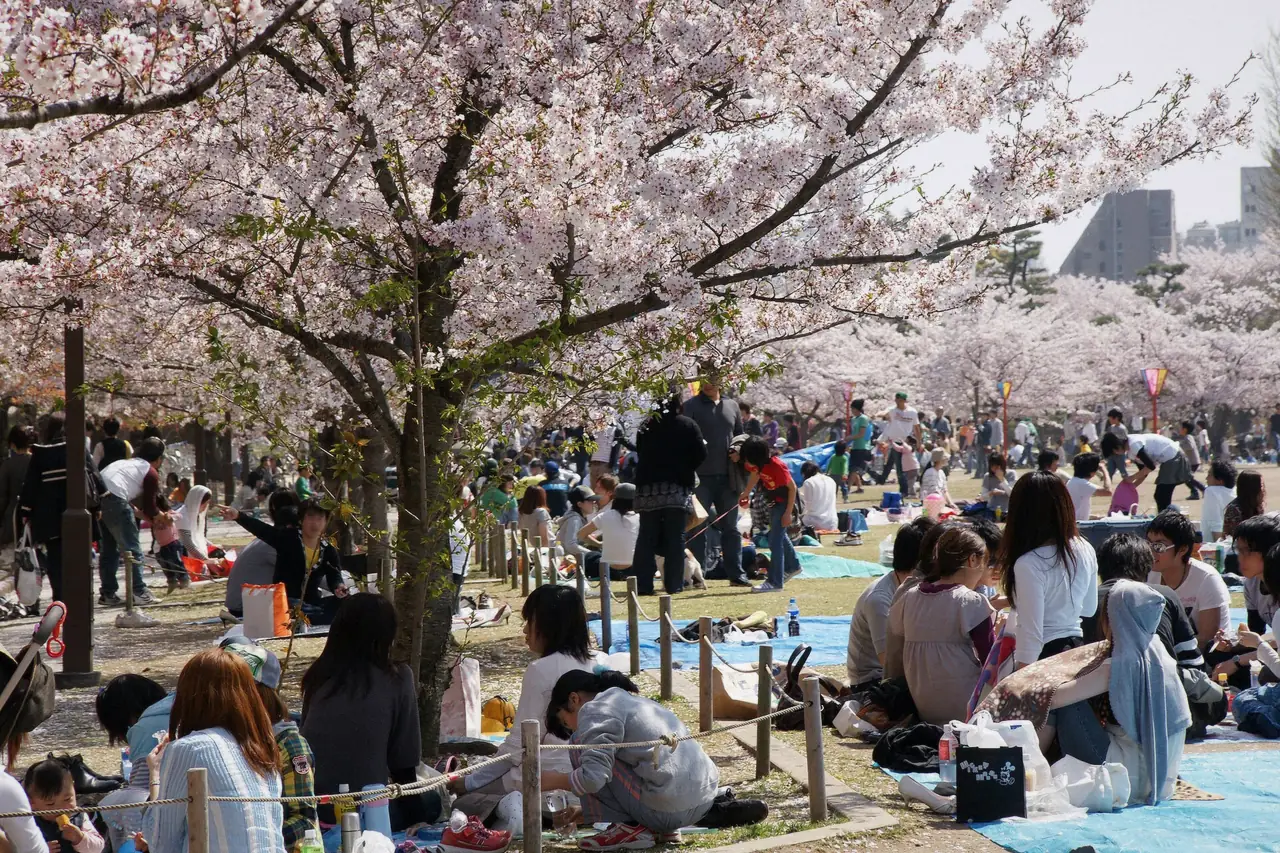
Peak sakura - the year's most beautiful and most crowded window at the castle. Photo: 663highland, CC BY 2.5, via Wikimedia Commons.
Quick answer April and November are the postcards; May and October are the connoisseur's months
Key takeaways
- Best overall: late October-November - autumn colour, 18-24 C walking weather, thinner crowds than sakura. Second best: late March-early April for the blossom itself, at maximum crowd cost.
- Hardest: late March-early April (bloom crowds) and mid-summer (32-33 C on shadeless gravel; the keep holds heat). Winter is crisp, quiet and cold at dawn.
- Two dates rewrite any plan: 11 December is free for everyone, and 29-30 December the castle closes. Booking lead follows the calendar - bloom weeks want tours locked two months out.
The Season Split
Four Himejis
Himeji's visit pattern is driven by two schools - the blossom-and-colour photographers and the Kansai weekend crowd - and both peak on flowers. Everyone else trades: spring's beauty against its queues, summer's empty 8:00 benches against its 33 C stairwells, winter's bare branches against its empty baileys.
| Season | Weather | Crowds | The honest read |
|---|---|---|---|
| Late Mar-Apr (sakura) | 10-20 C, changeable | Extreme at peak | The postcard; book everything two months deep |
| May & late Sep-Oct | 20-28 C, mostly dry | Moderate | The connoisseur's window - green or colour-adjacent, calm |
| Jun-Aug (rain & heat) | 24-33 C, humid, rainy season | High mid-day lulls | Go at 9:00, leave by 12:00; heat is the real queue |
| Nov (colour) | 10-18 C, crisp | High at peak colour | Second postcard; the maple garden peaks mid-November |
| Dec-Feb | 3-12 C, dry, clear | Low | Quiet stones, cold dawns, the castle to yourself |
Month by Month
The twelve honest entries
Figures are typical daytime highs for Himeji city; crowd notes read the castle's own pattern and a year of visitor reports.
| Month | High | Crowds | The read |
|---|---|---|---|
| January | 9 C | Low | Cold dawns, empty baileys, blue-sky keep shots |
| February | 10 C | Low | Plum blossoms late month; quietest castle month |
| March | 14 C | Rising to extreme | Blossom lands late month - book two months out |
| April | 20 C | Extreme first half | Peak bloom, peak queue; dawn entries only |
| May | 25 C | Moderate | Fresh green, calm grounds - the insider's spring |
| June | 28 C | Moderate | Rainy season; umbrella days, moss-bright stones |
| July | 32 C | High but heat-thinned | Go at opening; the keep is a kiln by 11:00 |
| August | 33 C | High but heat-thinned | Same strategy; evening light-ups reward the patient |
| September | 29 C | Moderate | Typhoon watch; early autumn clears are superb |
| October | 24 C | Rising | Comfort returns; awareness light-ups some evenings |
| November | 18 C | High at peak colour | Maple garden mid-month; the second postcard |
| December | 12 C | Low, one spike | 11 December free; 29-30 closed |
Heat is the underrated villain
The castle's own hot-season notice is blunt: no air conditioning, no elevators inside the keep, one vending machine at the entrance, and a request to carry water, hats and parasols. Six floors of steep wooden stairs at 33 C is a different product from the same stairs at 18 C - July and August visits belong to the 9:00 hour or the evening, and the tour formats that start earliest are the ones that make summer work.
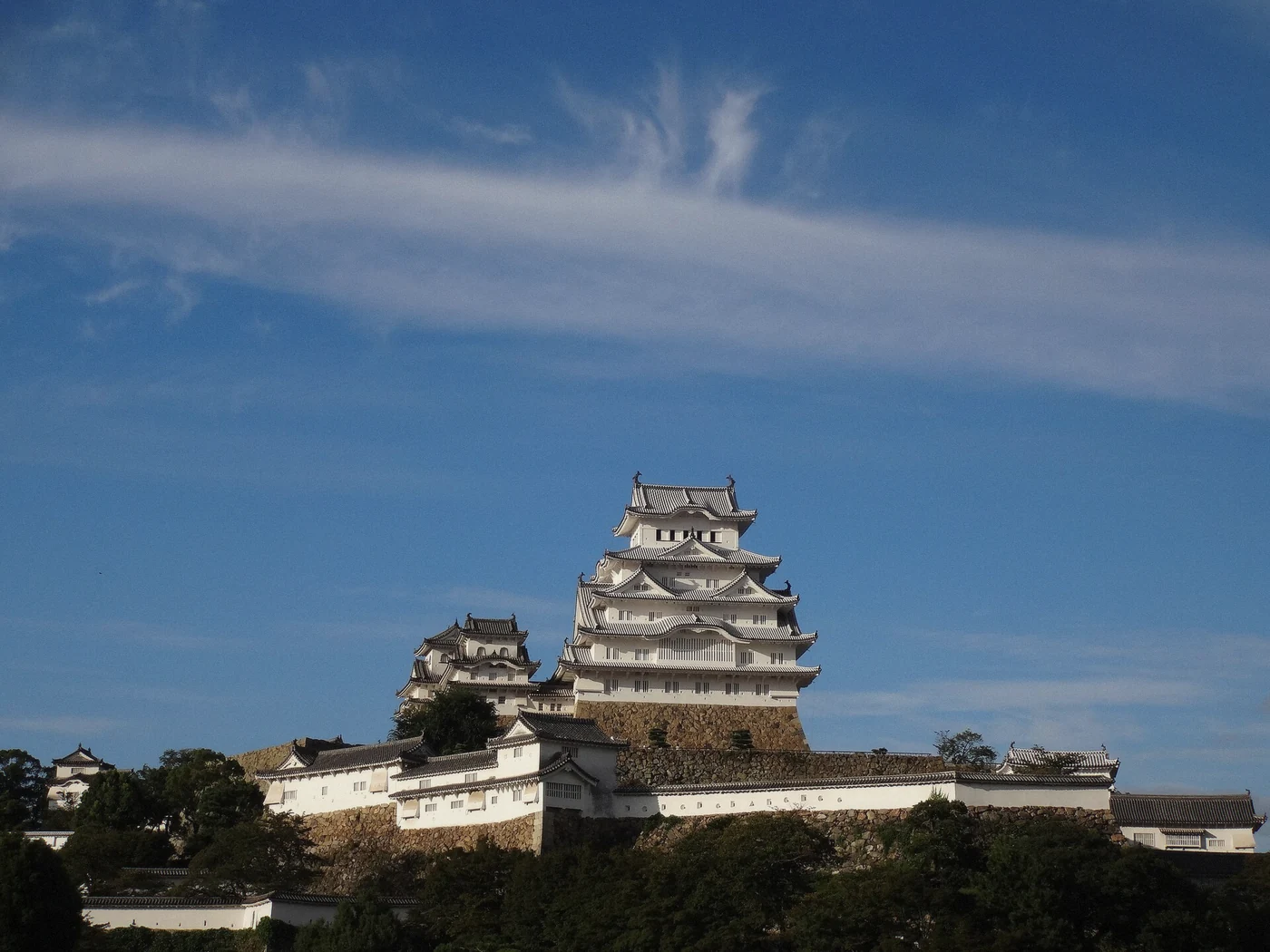
November's maple window - the second postcard, at half the sakura crowd. Photo: WorldContributor, CC BY-SA 4.0, via Wikimedia Commons.
Cherry Blossom and Autumn Colour Windows
The two weeks that run the calendar
Himeji's cherry blossom typically lands in the last week of March through the first week of April - a peak of roughly one week, announced by the city's blossom forecast in early March. The grounds' some-1,000 cherry trees (the moat rows and Nishi-no-Maru above all) peak with the city. Autumn colour runs mid-November into early December, peaking in the maple garden at Koko-en and the ginkgo lines on the approach.
Both windows share one rule: the grounds are the show and the keep is the prize, and both crowds know it - the dawn strategy below is not optional in either.
The Crowd Clock by Hour
One curve, one exception
On any ordinary day the queue curve is single-peaked: the 9:00 opening admits the first tour wave, the keep's staircase line maxes out 10:00-11:30, drains over lunch, and revives briefly before last entry at 16:00. The 9:00-9:30 entrant walks; the 10:30 entrant shuffles. The exception is bloom peak, when the curve flattens into a constant from dawn - the grounds fill before the gates open, and the keep queue is simply weather.
The castle's congestion indicator on its official site is the morning-of truth-teller.
What the clock means for each format
- Independent visitors: enter at 9:00 with an official dated ticket, keep first, garden after lunch.
- Guided-tour travellers: take the earliest slot on any listing - guides pace the stairs, but the queue is everyone's.
- Photographers: dawn (outside, free) for the empty-moat shots; the keep interior photographs best mid-week at opening.
Dates That Change Everything
The three to know
11 December: free admission for everyone - the UNESCO registration anniversary - and no tickets sold; expect local crowds, festive mood, thin foreign presence. 29-30 December: closed entirely. Golden Week (29 April-5 May): Japan's own travel peak, with domestic crowds that behave like sakura without the flowers. Around those, the light-up calendar (evening illuminations through the year, awareness colours in October) adds free evening value that costs nothing but schedule.
Booking lead by window
The lead numbers are the small-group formats' reality: the seven-seat culture walk and the four-seat boat ride sell by calendar, not by luck, in the two flower windows.
| Window | Book tours | Book restaurants/Train seats |
|---|---|---|
| Sakura peak (late Mar-early Apr) | 2 months ahead | 3-4 weeks |
| Autumn colour (Nov) | 4-6 weeks | 2 weeks |
| Golden Week | 6+ weeks | 3 weeks |
| All other times | 1-2 weeks | Days |
Matching the Season to Your Ticket
Four pairings that work
- Sakura peak: the earliest licensed-guide slot you can book, two months out - the guide's dated admission and pacing are worth double in bloom.
- Summer: DIY with the official online ticket at 9:00 sharp; tours only in the first slot of the day.
- Autumn colour: the castle-and-garden combo tour - the maple garden is half the show and the guide times it.
- Winter quiet: anything - the castle is yours; the self-guided route with a pocketful of context is the purist's choice.
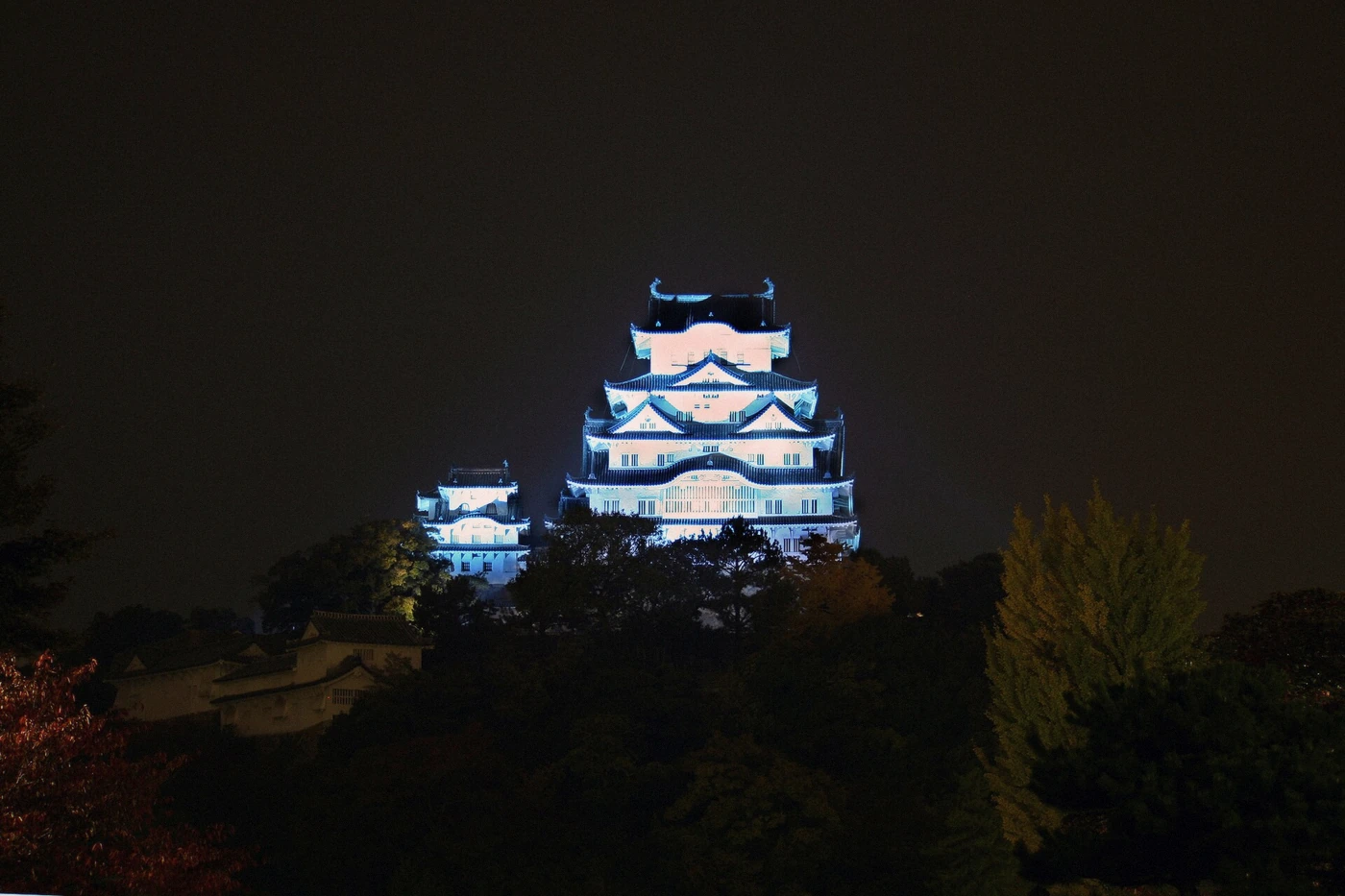
Evening light-ups run through the year - free from the outside, and worth the schedule. Photo: Corpse Reviver, Public domain, via Wikimedia Commons.
A Visit Day, Unedited
An independent traveller's full castle day on video - the closest a screen comes to the queue and the climb.
The Rainy Season, Honestly
What June actually does to a castle day
Tsuyu - the rainy front that parks over Kansai in June - is Himeji's most underrated season, and the honest read needs both halves. The wet half: some days are washouts, the gravel baileies darken and slicken, and photography is an umbrella-juggling act. The good half: the rains arrive in waves rather than all month, the mornings between fronts are luminous, the moss and the stone bases turn photogenic, and the crowds thin to a fraction.
The keep is indoor, the garden is arguably better in rain, and the only format that genuinely suffers is the moat boat - its weather clause is the month's one booking caveat. Pack the compact umbrella; keep the 24-hour cancellation window as the safety net; and treat a rainy-June Tuesday as one of the castle's best-kept dates.
Typhoon watch: September
September splits the year's weather risk into two profiles: early-month heat and late-month typhoons. The storm days are forecastable days ahead - the castle closes only in genuine danger, transport resumes quickly, and the practical defence is the same as June's: a booking with a free-cancellation window and a flexible morning. After a typhoon passes, the cleared-sky days are spectacular.
Golden Week and the Japanese Holiday Calendar
The domestic peak nobody plans around
Golden Week (roughly 29 April to 5 May) is Japan travelling in Japan: domestic crowds at sakura intensity, trains reserved solid weeks ahead, and the castle's grounds in festival mode without the flowers. New Year's week runs the opposite way - quiet streets, the castle open except 29-30 December, cold bright days - and the autumn holiday week (early November, 'Silver Week' is September's rarer cluster) thickens the colour season modestly. The practical rule for overseas travellers: check the Japanese holiday calendar before fixing dates, because the crowd calendar runs on it as much as on the flowers.
The light-up calendar
The evening castle is free, uncrowded after 20:00 and photographable from the boulevard and moat edges - the bloom guide's favourite second act, available most of the year for the price of staying up.
| Period | What lights | Cost |
|---|---|---|
| Year-round | Keep illuminated most evenings after dusk | Free, from outside |
| Sakura peak | Extended bloom light-ups, moat lanterns | Free |
| October | Awareness colour nights (pink has run) | Free |
| Special events | Seasonal performances, some evenings | Free or event-priced |
Crowd Data You Can Actually Use
Three signals, checked the morning of
The castle's own congestion indicator (on the official site since 2025) is the best single signal: a live read of how the grounds are running, updated through the day - check it over breakfast and again at the gate. Second: the weather services' bloom and foliage indexes in the two colour seasons, which track the windows at city resolution. Third: the trains - a packed special rapid arriving at Himeji is a crowd forecast in itself, visible twenty minutes before the ticket counter confirms it.
None of the three requires a booking; together they tell you whether today is a stairs day or a garden day, which is the only real-time decision the castle asks of you.
The hour, revisited for each format
The table compresses the crowd clock into bookings: whatever the month, the day's first ninety minutes own the keep.
| Your format | Best entry hour | Why |
|---|---|---|
| Independent, official ticket | 09:00 sharp | The keep queue compounds from 10:00 |
| Guided walking tours | First slot of the day | Guides pace stairs, not miracles |
| Photographers | 08:30 grounds, 15:30 keep | Light before crowds, warmth after them |
| Families | 09:30-10:00 | Post-wave, pre-peak; stairs at kid pace |
Two Worked Dates: April 3 and October 24
The same castle, two different days
Take a hypothetical April 3 - deep in the typical bloom window - and an October 24, the heart of the calm autumn shoulder. April 3: the moat rows are the morning's first photo queue from 06:00, the keep's staircase runs a constant shuffle from the 09:00 opening, the third bailey is a picnic mosaic by 10:30, and the day's correct shape is the dawn strategy - keep at opening, garden at noon, light-up after dinner. October 24: the gates open onto near-empty baileys, the keep climbs at your own pace all morning, the afternoon belongs to the garden's early tints, and the evening light-up needs no strategy at all.
Same stones, same tickets, utterly different days - which is the entire argument for choosing your month before your tour.
Shoulder-season receipts
Travellers' reports from the shoulders - May, late September, early December - read like adverts the castle did not write: bench seats on the keep stairs, conversation with the volunteers, photographs without strangers' elbows. The season table prices the trade in one column: the flower windows sell beauty and charge crowds; the shoulders sell the castle itself at cost.
Mistakes the Calendar Punishes
Five, in descending frequency
- Booking bloom week on instinct rather than forecast - a week early is bare branches, a week late is green; the forecast chain exists for this.
- Entering at 10:30 on any peak day - the queue curve peaks precisely then; the same ticket at 09:00 is a different castle.
- August afternoons - the keep's stairwell is the hottest room in Hyogo by 14:00; the season table flags it and the reviews confirm it.
- Golden Week by accident - travellers who did not check Japan's holiday calendar met sakura-density crowds without the flowers.
- 11 December assumptions - half the forum posts get it backwards: the day is free (no tickets sold) and mildly crowded, not closed. 29-30 December is the closure.
When NOT to Go: The Honest Blackout List
Dates and windows with asterisks
29-30 December: closed, full stop. Bloom peak without a plan: technically open, functionally a queue seminar - go only with the dawn strategy or a guided slot. Mid-August afternoons: the keep's stairwell converts to a kiln; mornings only.
Golden Week without reservations: domestic travel peak compresses everything from trains to lunch counters. None of these are secret - they are the calendar's fine print, and this page exists to print it before the booking lead makes it expensive.
The Month We Would Pick, If Forced
Late November, first week of December
Given one Kansai week and one Himeji day, the site's quiet vote goes to the colour season's tail: the maple garden holds late, the crowds thin after the peak fortnight, the air is crisp enough for the staircase to be pleasure rather than policy, and the evening light-up arrives early enough for a dinner-time second act. Sakura is the more famous answer and the bloom guide gives it full marks; late November is the answer that never queues.
Reading the Castle's Own Signals
Three official sources worth a bookmark
The castle's congestion indicator (live crowd read, added 2025), the official site's hours-and-closures calendar (the 16:00 last entry authority, and the summer-extension announcements), and the city's bloom forecast each March - between them they answer every timing question this page generalises. The official ticket site adds the fourth signal: its dated-entry calendar greys out genuinely scarce days, which in the flower weeks is the sharpest single demand gauge the castle publishes. Check two of the four on the morning; trust the season table for everything further out.
The five-year pattern, honestly generalised
Recent seasons have bent in ways worth pricing: bloom dates drifting earlier by a few days per decade, autumn colour holding later, September's typhoon risk staying real, and the June rains arriving in burstier waves. None of it changes the season split; all of it argues for booking the flower windows with cancellation-friendly products - the comparison's 24-hour standard - and for treating any specific-date forecast older than a fortnight as a rumour with a website.
The Week-by-Week Cheat Sheet for the Two Peaks
Bloom fortnight, sliced
Week one of the bloom window (kaika to first white blush): grounds half-empty, photographers' week, no special strategy needed. Week two (mankai): the full machine - dawn entries, booked mornings, picnic lanes at density. The tail (chiru): pink drift on the moat, crowds halved, the garden's wisteria queuing up.
The same three-week slice in November runs quieter at every stage, with colour peaking mid-window instead of at its start - which is why the forced-choice verdict leans late November for anyone whose dates flex either way.
Which Month to Avoid Osaka-Side Travel
If you must pick a month to skip
Ask which month to avoid for Osaka and the Kansai lowlands and the honest answer is August: the same heat that turns the keep's stairwell into a climb-at-dawn proposition makes the region's city walking miserable between 11:00 and 17:00, and hotel prices stay at summer peaks besides. September runs a close second for typhoon risk rather than heat. Both are survivable with the morning-first schedule this page prints - but if your dates flex, May and late October give you the same sights at walking temperatures.
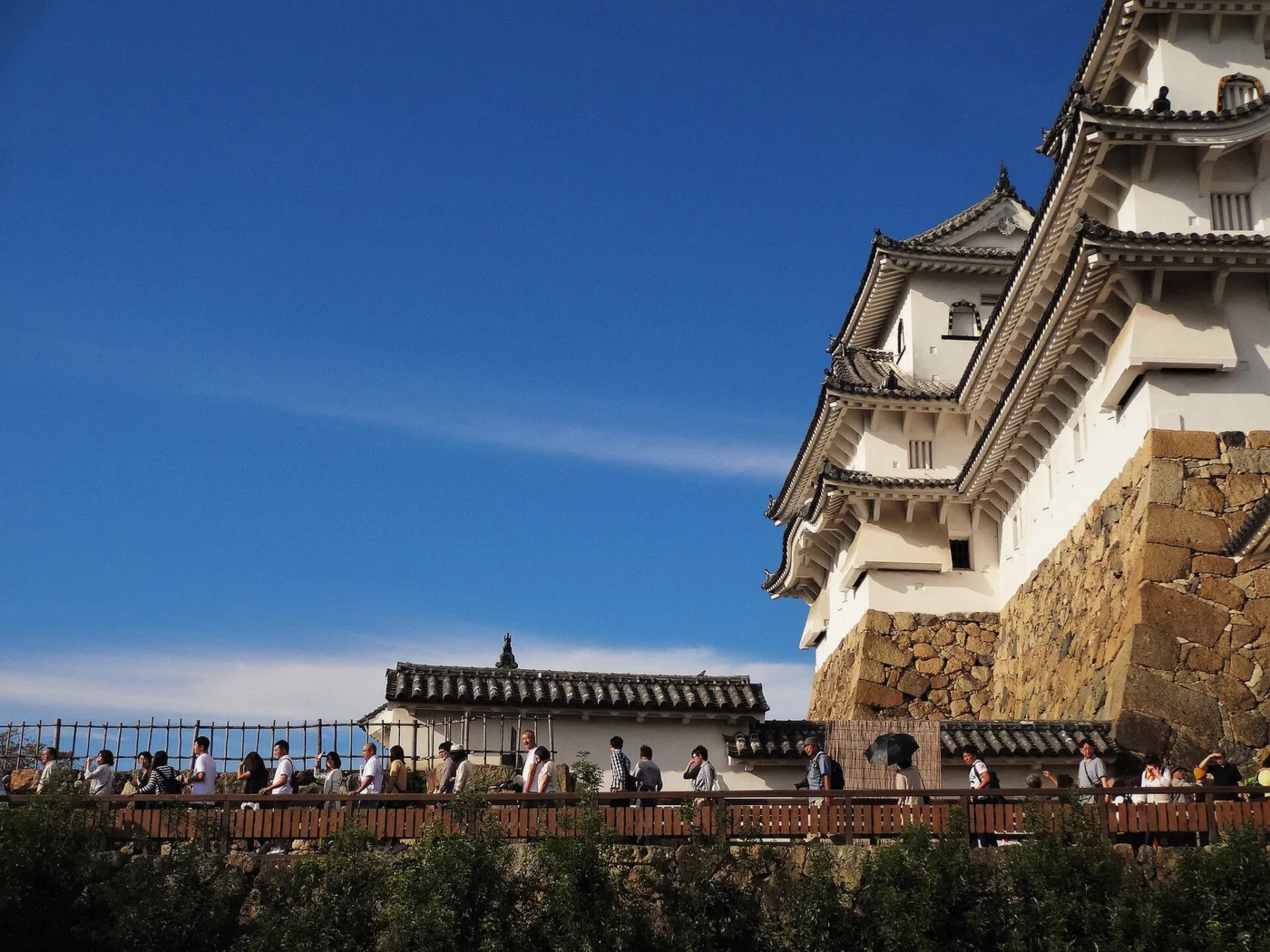
Late September - the heat breaks and the light softens. Photo: WorldContributor, CC BY-SA 4.0, via Wikimedia Commons.
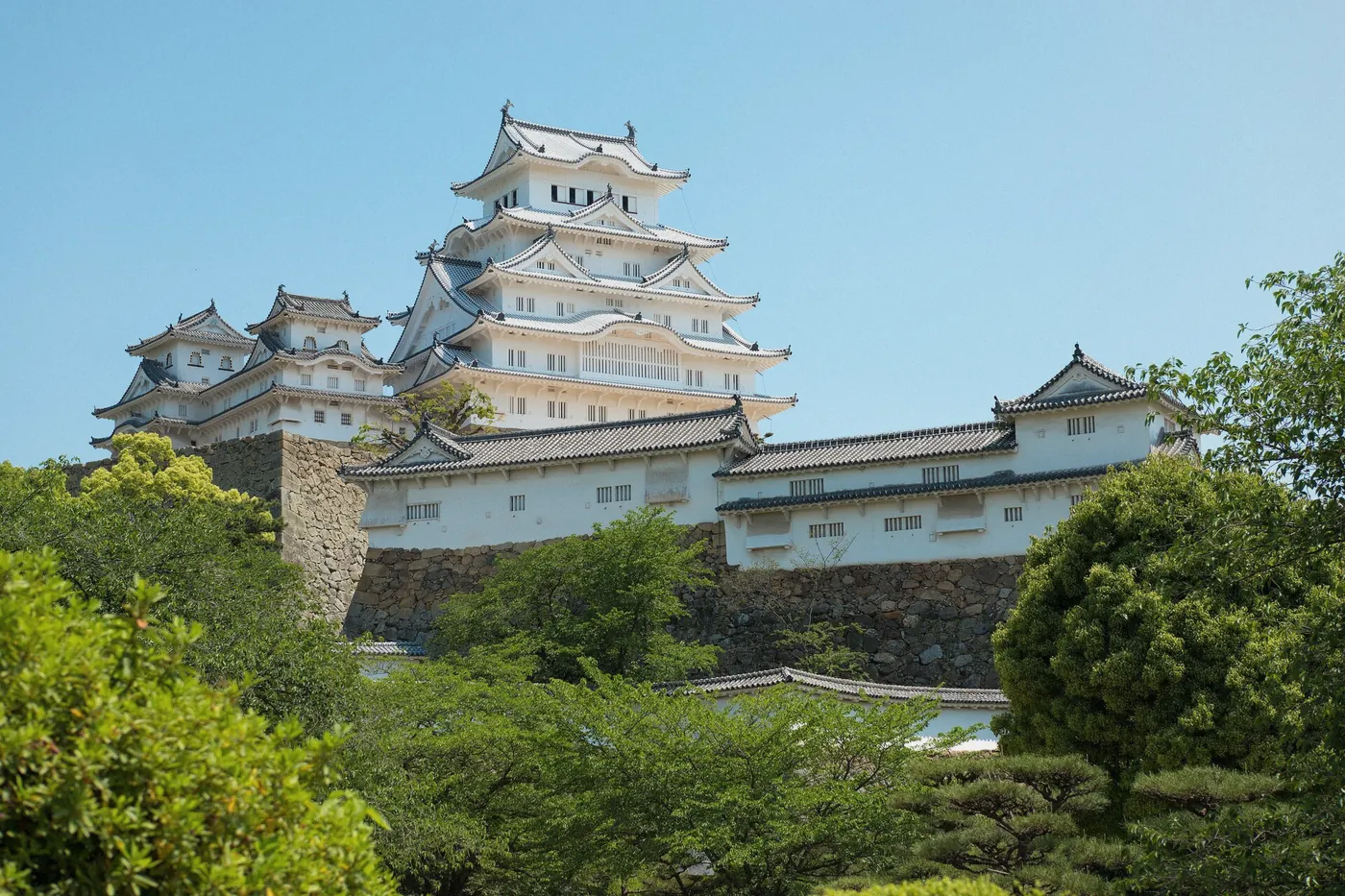
A clear-sky keep day - the quiet months' standard product. Photo: Nikos Kitsakis, CC BY-SA 4.0, via Wikimedia Commons.
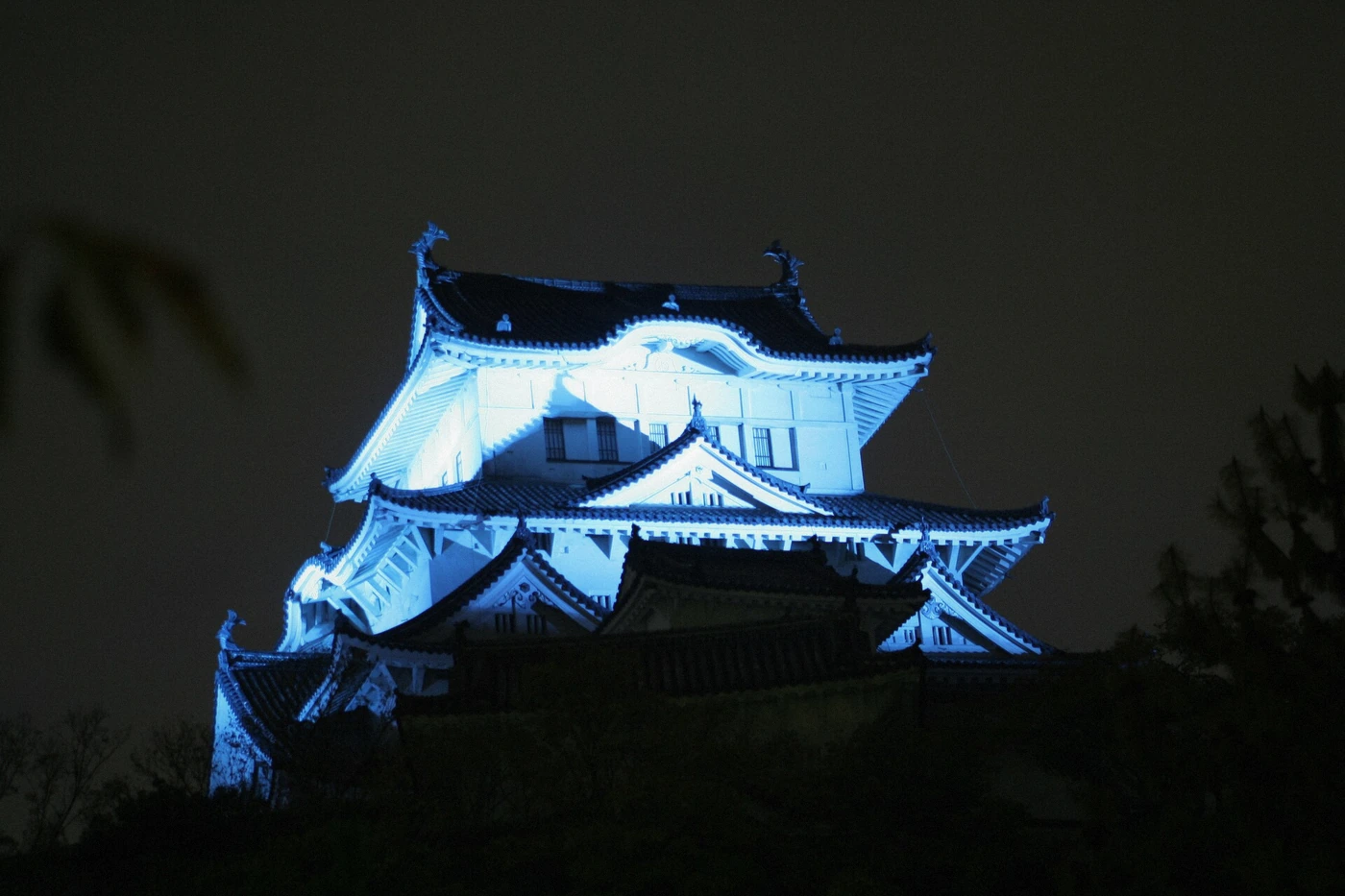
The evening light-up: free, uncrowded, year-round. Photo: Corpse Reviver, Public domain, via Wikimedia Commons.
Best Time to Visit: Frequently Asked Questions
What is the best month to visit Himeji Castle?
For most travellers, late October through November: 18-24 C, autumn colour peaking mid-November, and crowds well under sakura levels. Late March-early April is the equal-beauty answer for blossom chasers willing to pay the crowd price; May is the quiet compromise.
When do cherry blossoms bloom at Himeji Castle?
Typically the last week of March into the first week of April, with a peak of about one week - the exact dates shift with the spring and are forecast by the city in early March. The moat rows and the Nishi-no-Maru gardens carry the classic compositions.
How crowded does Himeji Castle get in cherry blossom season?
Peak-bloom days run at festival density from dawn: the grounds fill before opening, the keep queue is constant through the day, and the 16:00 last entry does not thin it. The workable strategies are the 9:00 first entry with a dated official ticket or the earliest slot on a tour booked two months out.
Is Himeji Castle worth visiting in winter?
Yes - winter is the quiet season: clear cold days, empty baileys, and the keep's white plaster against blue sky. January and February highs run 9-10 C, so bring gloves for the wooden staircases. The bonuses: 11 December is free, and snow-dust keep mornings are the photographer's lottery win.
What is the rainiest time to visit Himeji?
June through mid-July, the rainy season - though the practical impact is modest: the route runs in rain, the keep is indoor, and the moss-bright stones photograph beautifully. Pack a compact umbrella; only the moat boat among the comparison's formats is weather-sensitive.