 Himeji Castle Ticket
Koko-en Garden: Tickets, the Nine Gardens, and Pairing It with the Castle
Koko-en garden Himeji built in 1992 beside its castle is the fortress's other half: nine Edo-style gardens on the excavated footprint of the lord's western residence, two minutes from the keep exit along the moat. This guide covers the tickets (400 yen alone, 2,600 yen combined), what each garden holds, and how the garden changes a castle visit. For the castle's own entry rules, see the ticket comparison.
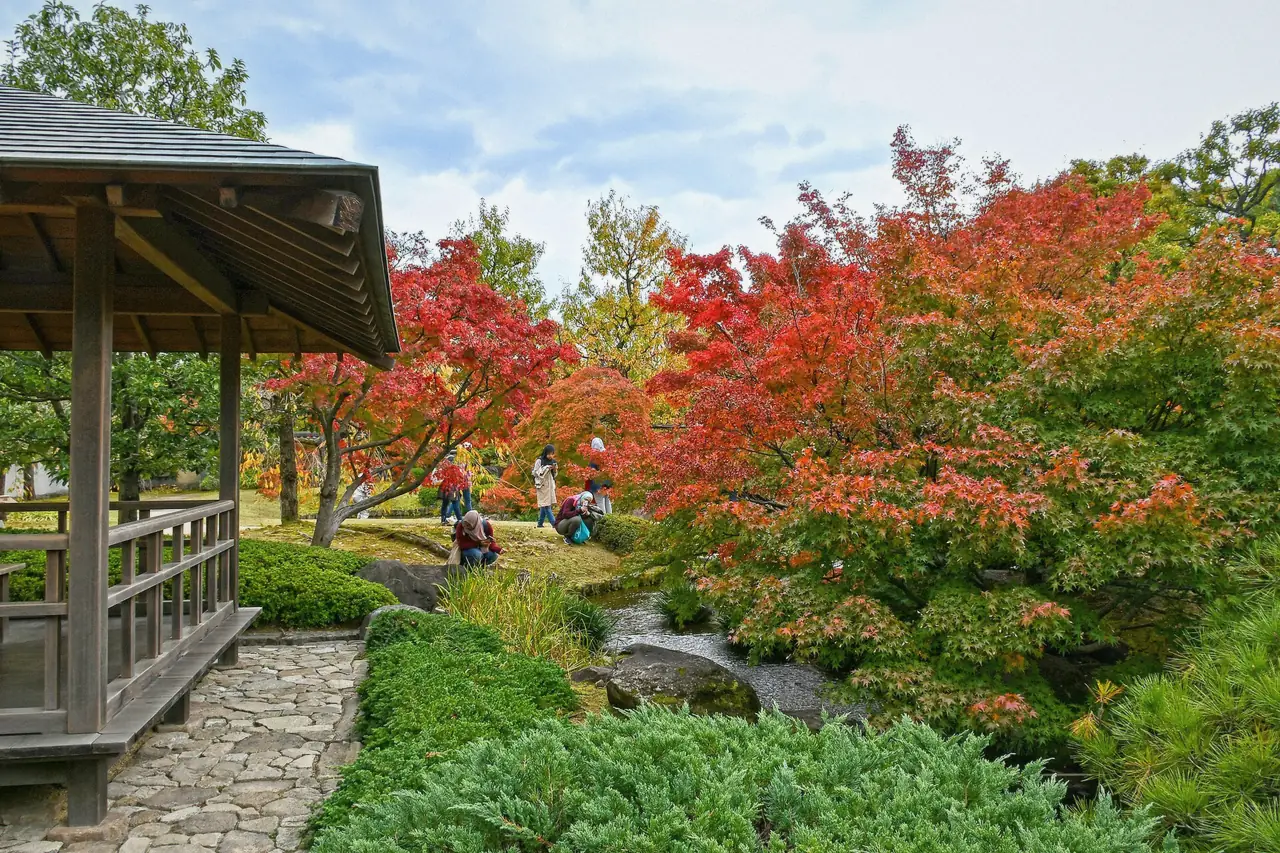
Koko-en's nine gardens re-create the lord's residence quarters in Edo-period style. Photo: ScribblingGeek, CC BY-SA 4.0, via Wikimedia Commons.
Quick answer 400 yen for nine gardens: what the combo buys and when the garden matters most
Key takeaways
- The garden's own ticket is 400 yen; the castle-plus-garden combo is 2,600 yen against 2,900 bought separately - and the official online seller carries both.
- Nine gardens on the excavated foundations of the lord's western residence: carp pond, tea court with a working teahouse, seasonal flower courts, seedling beds and the bamboo lane.
- Peak moments: wisteria over the entrance (late April-May), the maple garden (mid-November), and the quietest hours any weekday afternoon - guided pairings narrate it best.
What Koko-en Is
A modern garden with old bones
Koko-en opened in 1992 - which surprises visitors who assume the gardens are Edo-period survivors. The honest story is better: excavations of the site uncovered the stone foundations of the lord's western residence and its samurai quarters, and the nine gardens were laid out on those exact footprints following period plans, each garden re-creating a different function a residence of this rank held. The result is scholarly reconstruction rather than relic - clipped, maintained, and historically legible in a way a ruined site is not.
The name honours Koko-dono, a 17th-century castle chatelaine; the gardens sit along the castle's west moat, and the keep looms over the pines at several deliberate sightlines.
Tickets and the Combo Price
The arithmetic
The combo saves 300 yen against separate purchases and exists in one place: the castle's official channels. Guided options complicate it usefully - the castle-and-garden tours bundle both admissions with a guide for $78-$107, which is the right buy when a guide is wanted anyway; the culture walk makes the garden option-dependent at checkout, so read the dropdown.
| Ticket | Price | Where |
|---|---|---|
| Koko-en alone | 400 yen | Garden gate or official site |
| Castle + garden combo | 2,600 yen | Official site and castle counters |
| Castle alone (for reference) | 2,500 yen | Official site and counters |
Where the ticket is checked
The garden's entrance sits on the west-moat path - from the keep's exit, follow the bailey's western edge; the walk is two minutes. A second gate near the sake-district side serves visitors arriving from town without entering the castle. Tickets are checked at the gate, QR or paper; the garden re-entries its own ticket once, so a teahouse break does not require repurchasing.
The Nine Gardens
A residence in nine chapters
Each garden re-creates one function of the residence: the Lord's Garden with its carp pond and viewing hill; the Tea-Ceremony Garden holding a working teahouse (So-an) where matcha is served; the Sound-of-Streams garden, all water over stone; the Bamboo Garden's lane; the Flower Gardens that rotate through the seasons - wisteria, iris, hydrangea, maple; the Seedling Garden's raised beds, still practical; and the pine-clad West Garden closing the circuit. The whole circuit is 20-40 unhurried minutes, longer with photographs - compact by design, since the residence it re-creates served as domestic counterweight to the castle's military grandeur, not as a promenade park.
What a guide adds here
Unguided, Koko-en is a pleasant garden with informative panels. Guided, it becomes an argument: the pond's placement as display of wealth, the tea court's etiquette in stone, the sightlines deliberately framing the keep as the residence's guardian. Reviews of the both-sights listings repeatedly single out the garden half - the guide earns the second ticket there, where the castle's own walls need less narration.
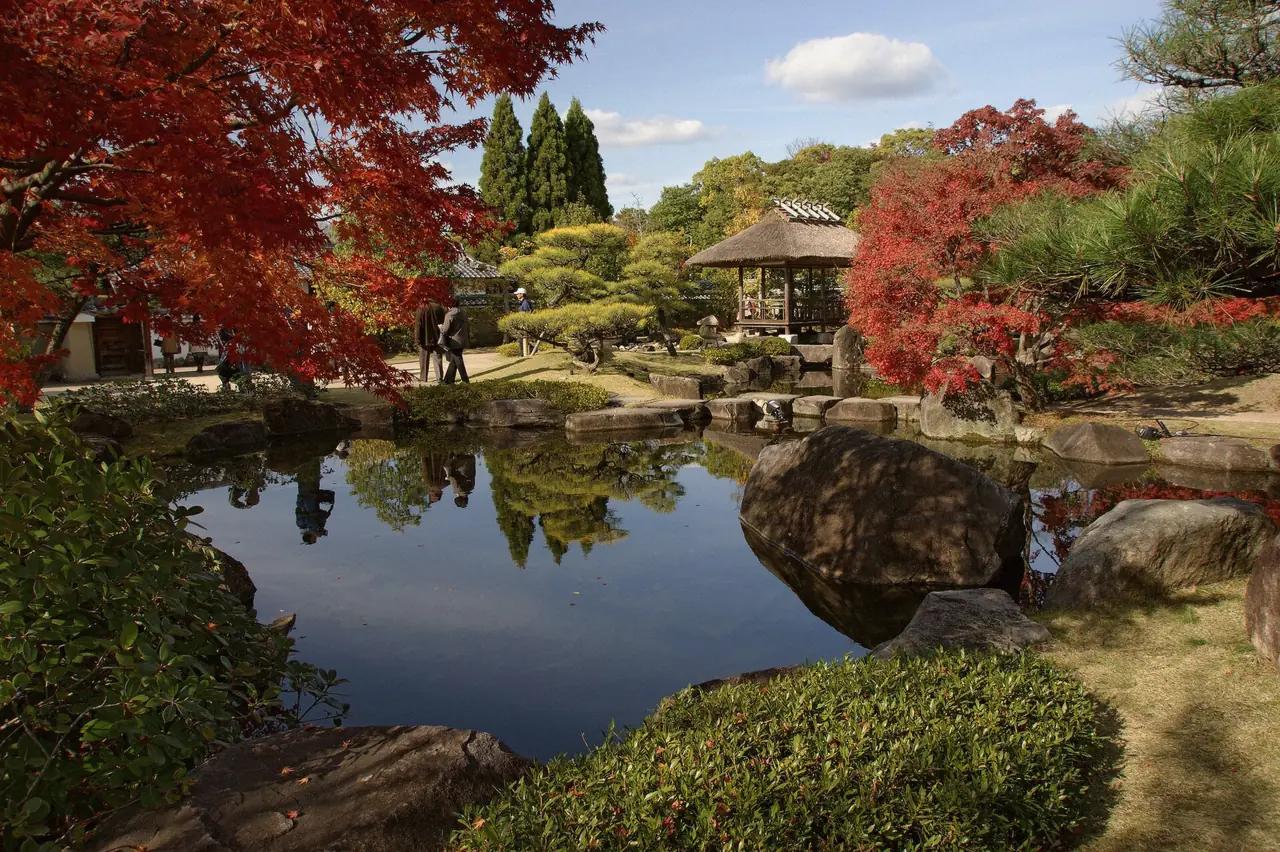
The Lord's Garden's carp pond - the residence's display of wealth, in water. Photo: 663highland, CC BY 2.5, via Wikimedia Commons.
The Teahouse and Seasonal Events
Matcha, maples and chrysanthemums
The tea garden's teahouse serves matcha and seasonal sweets at its tatami seats - the castle day's best sit-down, priced in the hundreds of yen and worth every one in June heat or November colour. The garden's event calendar is quiet but real: chrysanthemum displays in autumn (the Koko-en beds grow the blooms themselves - the seedling garden's chrysanthemum cultivars are show plants), moon-viewing evenings in autumn, and the wisteria over the entrance trellis in late April. Check the garden's own board by the gate for the month's programme; nothing here sells out, which after the castle's keep queue is its own luxury.
Best Times to Visit
Season and hour
The garden's peaks mirror the castle's with one shift: mid-November is Koko-en's finest hour - the maple garden at full colour, often better than the castle's own autumn show - and late April runs a close second on the wisteria. Summer afternoons are the garden's advantage over the castle: shade, water and the teahouse make it the heat refuge a keep cannot be. Hour-wise, weekday afternoons are quietest; tour groups pass through mid-morning on the combo routes.
Rain is a garden bonus - the gravel darkens, the maples shine, and the crowds thin.
Combining the Garden with the Castle
The natural order of a two-ticket day
Castle first, garden second is the day's correct physics: the keep needs morning legs and morning light, and the garden rewards tired feet with benches and water. The reverse order fails twice - the keep queue peaks while you sit in a garden, and the garden's calm is wasted on pre-climb nerves. Independent visitors on the combo ticket should keep the castle's 16:00 last entry in mind; the garden stays open slightly later seasonally.
Travellers choosing a guided shape: the 3.5-hour combo tour runs the physics in the right order with both tickets handled, and the four-hour culture walk adds the old town between the two - confirm its garden option at checkout.
The Garden in Motion
An independent walkthrough that pairs the castle with the garden - the two-act structure this page prices.
Garden Origins: The 1992 Build on Old Bones
Reconstruction, done archaeologically
Koko-en's honest dates: the residence that stood here burned with the castle town's edge in 1682's great fire, the ground was later school terrain, and the city excavated it ahead of the garden's 1992 construction - uncovering the stone foundations and gutters of the lord's western residence and its retainers' quarters. The nine gardens were then built on those footprints to Edo-period plans, using period techniques where practical: dry-stone joints, plastered earthen walls, and the mud-plastered nagaya gates. That lineage - a modern garden that is also an archaeological exhibit - is what a guide explains and what the panels compress.
The castle-and-garden tours narrate it; this page records it.
The nine, garden by garden
- The Lord's Garden: the carp pond, the viewing hill, the residence's ceremonial face.
- The Tea-Ceremony Garden: the So-an teahouse and its roji approach - matcha served daily.
- The Sound-of-Streams Garden: water over stone, the meditative centrepiece.
- The Bamboo Garden: a lane through standing culms, best light mid-morning.
- Three Flower Gardens: wisteria (May), iris and hydrangea (June), autumn bulbs - the rotating wing.
- The Seedling Garden: working beds raising the garden's own stock, chrysanthemums for autumn shows.
- The Pine Garden and West Garden: clipped pines and the closing circuit by the west gate.
The Teahouse Ritual, and What It Costs
Matcha as the day's rest stop
The So-an teahouse serves matcha with a seasonal sweet at tatami seating - a few hundred yen, ordered at the counter, served with the garden's best view back at the pond garden. It is the castle day's only seated hour: in June heat it is strategy, in November colour it is ceremony, in rain it is shelter with a whisk. No reservation is needed on ordinary days; bloom-week afternoons queue briefly.
Garden entry is required (the 400-yen ticket covers it), and the teahouse is the reason the garden hour belongs late in a castle-first day.
Koko-en with Children and with Elders
The garden as the equaliser
Where the keep excludes, the garden includes: flat, firm-gravel circuits, benches at every garden's edge, carp to feed (food sold at the pond), and the teahouse's chairs-for-your-shoes ritual that children treat as a game. Buggies navigate all nine gardens; walkers manage them hand-in-hand. For mixed-ability parties doing the castle, the honest split - climbers to the keep, the rest to the garden, reunion at the teahouse - is exactly how local families visit, and the combo ticket's price makes it the cheapest 90 minutes of the region's sightseeing.
Photography in the Nine Gardens
Frame notes, garden by garden
- Lord's Garden: shoot the pond from the viewing hill downward - carp, lantern and pines stack; morning light sits behind you.
- Tea garden: the roji approach is the frame, not the teahouse - a path leading in says more than the building said to anyone.
- Sound-of-Streams: slow the shutter; the water over stone is the garden's only motion.
- Bamboo lane: mid-morning side-light; a person at the lane's bend gives the culms their scale.
- Flower gardens: rotate with the calendar - wisteria hung in May, iris in June; the season table dates the rest.
- Seedling beds and pine garden: the texture shots; overcast days are their best light.
The keep in the frame
Koko-en's designer gave the gardens deliberate sightlines back at the keep, and they are the money shots: pines clipping the white tower over the west walls (from the Lord's Garden's hill), and the long gallery wall leading the eye to the roofs (from the west garden's exit path). Morning keeps the keep's south face bright; late afternoon silhouettes it for the moody version. No ticket beyond the garden's own is needed for any of it - the views are the entry price's quiet dividend.
Two Worked Garden Hours: The Stroller and the Sketcher
Forty minutes or ninety - the nine rooms flex
The stroller does the circuit in forty minutes: pond, tea court, bamboo lane, the flower wing of the month, out the west gate - a complete, unhurried-seeming visit that misses nothing essential. The sketcher takes ninety: the same rooms, each given ten minutes of sitting, the teahouse in the middle, the keep-in-the-frame sightlines worked at leisure. The garden is designed for both - nine small rooms mean nine chances to stop without feeling stuck - which is exactly why the combo day puts it after the keep: the castle spends your legs, and the garden repays whatever pace is left.
The garden's quiet perks, itemised
- Benches with intention: every garden holds one seat placed for its best view - the pond's hill, the bamboo lane's bend, the pine garden's gate.
- The chrysanthemum beds: the seedling garden raises the autumn show's own flowers - the season table dates the display.
- Winter sparseness: bare branches expose the excavation lines - the 1992 story reads clearest in February.
- Rain discs: gravel darkens, maples shine, umbrellas multiply - the garden's weatherproof half.
- The west-gate exit: it points you at the sake district's edge, which is the afternoon's best default.
Events and the Garden's Small Calendar
What the garden adds through the year
Beyond the season table, Koko-en runs a quiet programme: the autumn chrysanthemum exhibition grown from its own seedling beds, moon-viewing evenings in the tea garden, seasonal flower displays in the rotating wing, and craft demonstrations on selected weekends - all included in the 400-yen ticket, all announced on the boards by the gate rather than the castle's main channels. None sells out, none crowds; the events are the garden's way of rewarding locals between the castle's peaks. Check the board on arrival - the garden's best afternoon is occasionally the one it planned for you.
The Garden's Relation to the Castle, Argued
Why the pair belongs to one ticket
The castle argues power - walls, gates, the keep's command of the plain - and Koko-en argues the point of it: the residence culture the walls defended, in gardens sized for tea and poetry rather than cannon. Visited apart they are a fortress and a pretty garden; visited in sequence they are one estate's two registers, which is why the combo ticket prices them together and why the both-sights tours narrate them as a single argument. The 400-yen standalone remains a bargain for the gardener in a hurry; the pair is the story.
What to read before, and what to leave to the garden
Preparation pays twice here: know the 1992 excavation and the nine rooms' functions, and the layouts stop being pretty labyrinths. Leave to the garden itself: the seasonal turns (no forecast beats walking in), the teahouse's mood, and the carp's opinions of your fingers. The worked hours cover the rest - and if the visit is castle-first, the garden is where the day's questions finally get benches to answer them on.
The Nine Gardens, Reviewed as One Route
A walking order with reasons
Enter through the main gate and the wisteria trellis sets the tone; the Lord's Garden's pond hill gives the route its first keep-in-the-frame view; the tea garden follows at its most social hour; the Sound-of-Streams garden is the route's slow centre - sit, the water does the narrating; the bamboo lane cools the middle; the three flower wings rotate by season and reward whichever is on; the seedling beds explain the chrysanthemums you will meet in autumn; and the pine-and-west gardens close the loop at the west gate, pointed at the sake district and the station walk. The order is the garden's own design - reversing it works but hands the route's best reveal (the pond hill's keep) to tired legs.
Five things laid out on purpose
- Sightlines: several gardens frame the keep deliberately - the residence announcing its guardian.
- Sound: the streams garden sits where the walls channel water noise - Edo sound engineering.
- Screening: bamboo and pine walls hide each garden's neighbours until the gates reveal them - nine small worlds, one estate.
- The hill: the Lord's Garden's knoll is built, not found - the view is composed from above, Edo-style.
- Seasonal rotation: the flower wings mean no two visits plant the same picture - the calendar is a design document.
And one honest miss
The gardens are 1992 reconstruction, and no amount of archaeology makes the patina older than the excavator: visitors expecting Kyoto's temple gardens' moss-decades will notice. What the site offers instead is legibility - the Edo layouts are drawn on the ground's actual foundations, labelled honestly, and maintained to a standard the older gardens sometimes envy. Read it as a working demonstration of residence-garden design rather than a relic, and the 400-yen ticket overdelivers.
Koko-en in the Course of a Year of Visits
What repeat visits reveal
The garden's design rewards the second and third visit in ways single itineraries cannot: the flower wings' rotation means May's wisteria visitor returns to June's iris beds, the teahouse's sweets follow the seasonal calendar, and the chrysanthemum exhibition's blooms can be watched being raised in the seedling beds months ahead. Kansai residents' annual pattern - sakura at the castle, iris here in June, maples in November - is the honest use the combo pricing quietly assumes; for the one-time visitor, the worked hours stand in for the years.
The Last Bench: A Closing Argument
Why the garden is the castle day's best half-hour, not its leftover
Itineraries treat Koko-en as the castle's appendix - visited tired, remembered vaguely. Turn it around and the day improves: the nine gardens are where Himeji explains itself at bench height, where the tea ritual seats the traveller the keep just tired, and where the combo ticket's second half quietly outearns the first per minute spent. Give it its own hour and its own bench - the pond hill's, if this page may choose - and the castle quarter's whole argument closes with the water sound the Edo designers put there on purpose.
Koko-en Against Japan's Famous Gardens
Where a 1992 garden sits in the national conversation
The rankings first: the most famous Zen garden in Japan is Kyoto's Ryoan-ji with its fifteen-stone karesansui - and Koko-en is not a Zen garden at all, but a residence garden in the Edo lay style. The most beautiful garden in Japan, in the usual polls, is Kenroku-en in Kanazawa; and Japan's top 3 gardens - the Three Great Gardens - are Kenroku-en, Okayama's Koraku-en and Mito's Kairaku-en. Koko-en does not compete on that ladder, and honestly: it is a young, compact reconstruction.
What it offers instead is position - nine Edo-style rooms two minutes from Japan's finest original keep, priced at 400 yen, narrated by the castle-and-garden tours - which makes it the best-value garden-hour in the country for anyone already standing at Himeji's gate.
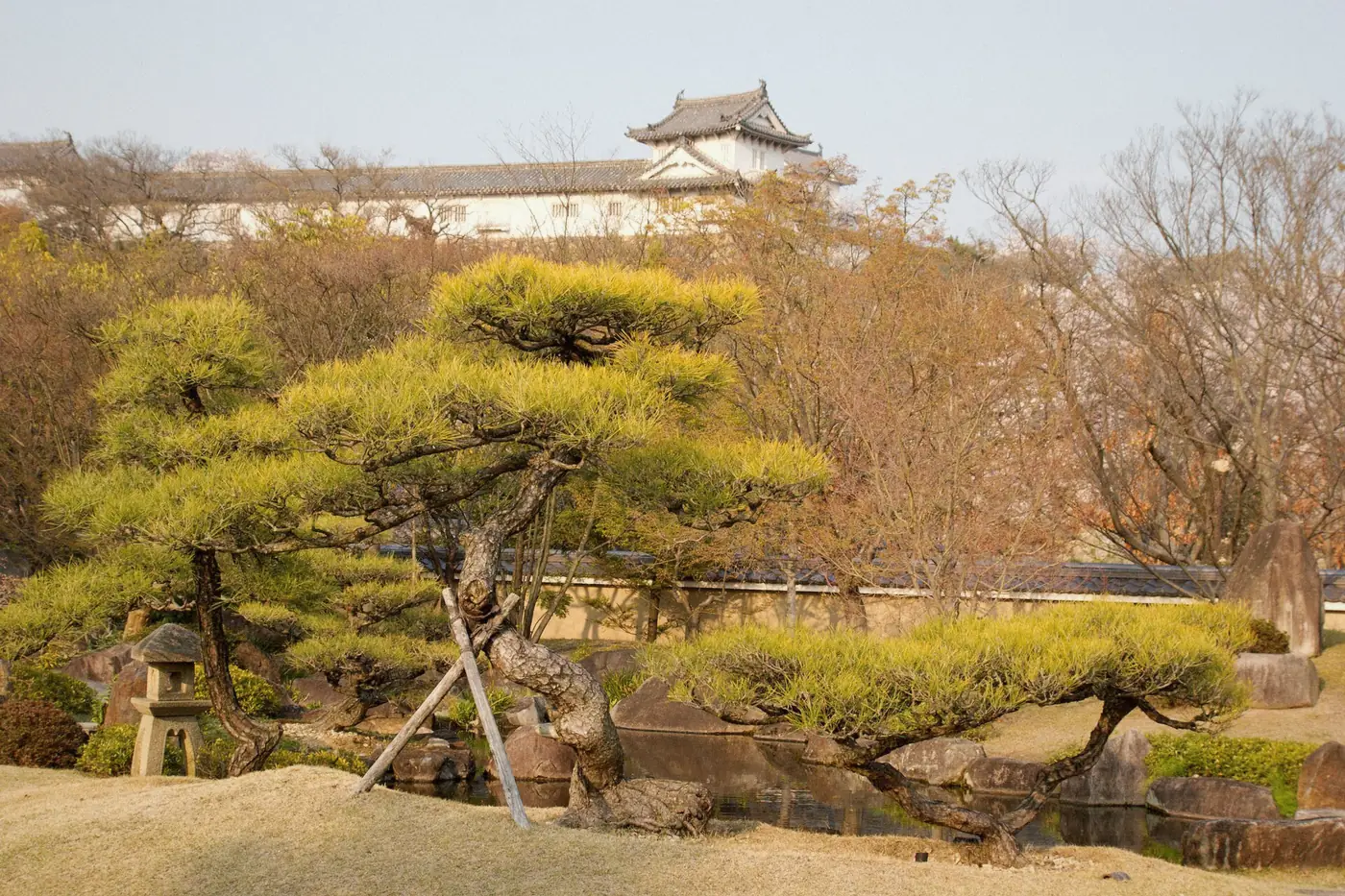
The Lord's Garden's lantern - the pond garden's composed centrepiece. Photo: KimonBerlin, CC BY-SA 2.0, via Wikimedia Commons.
The Sound-of-Streams garden - the route's slow centre, where the water narrates. Photo: DimiTalen, CC0, via Wikimedia Commons.
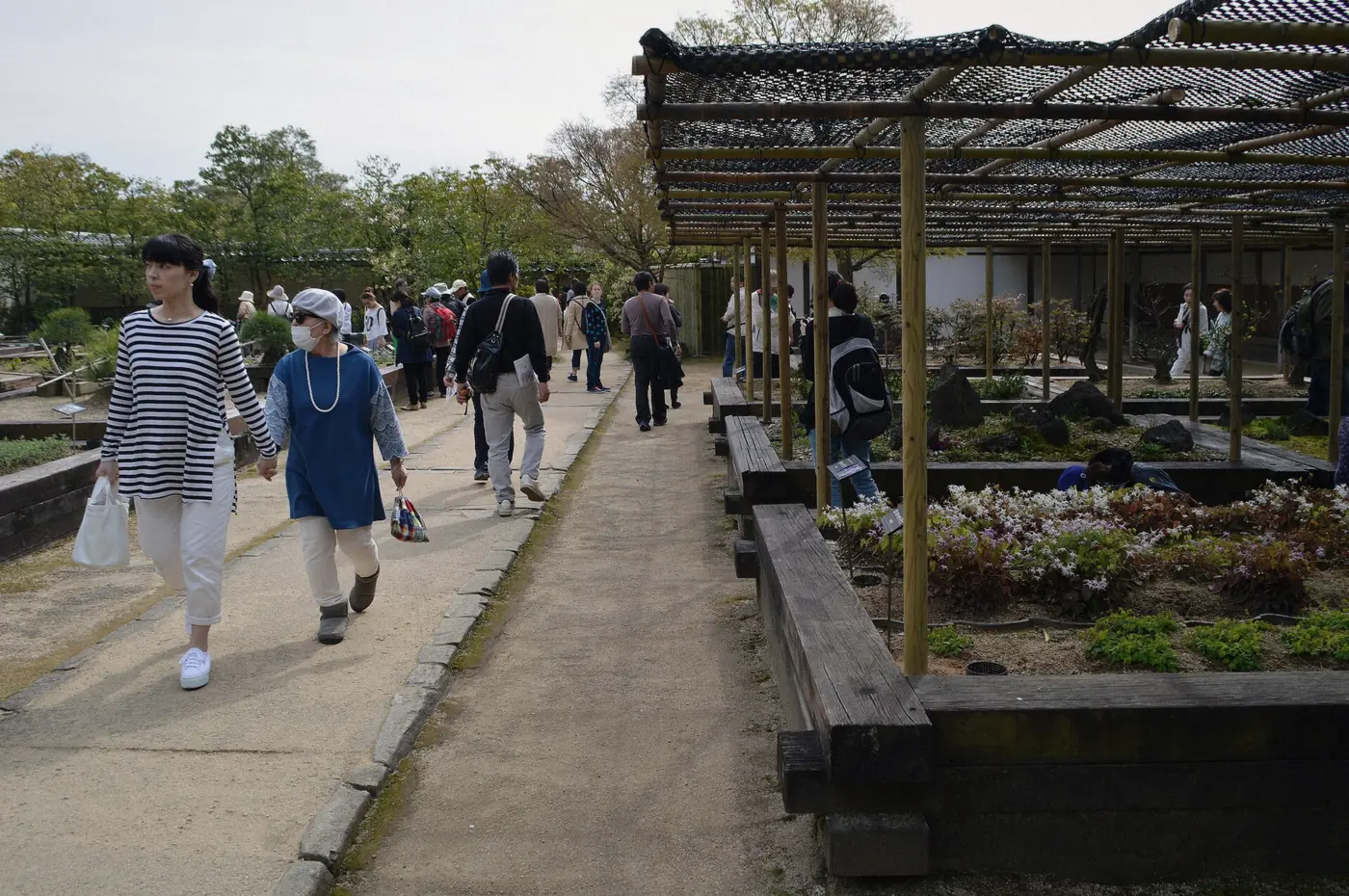
The seedling garden still raises the chrysanthemums shown each autumn. Photo: KimonBerlin, CC BY-SA 2.0, via Wikimedia Commons.
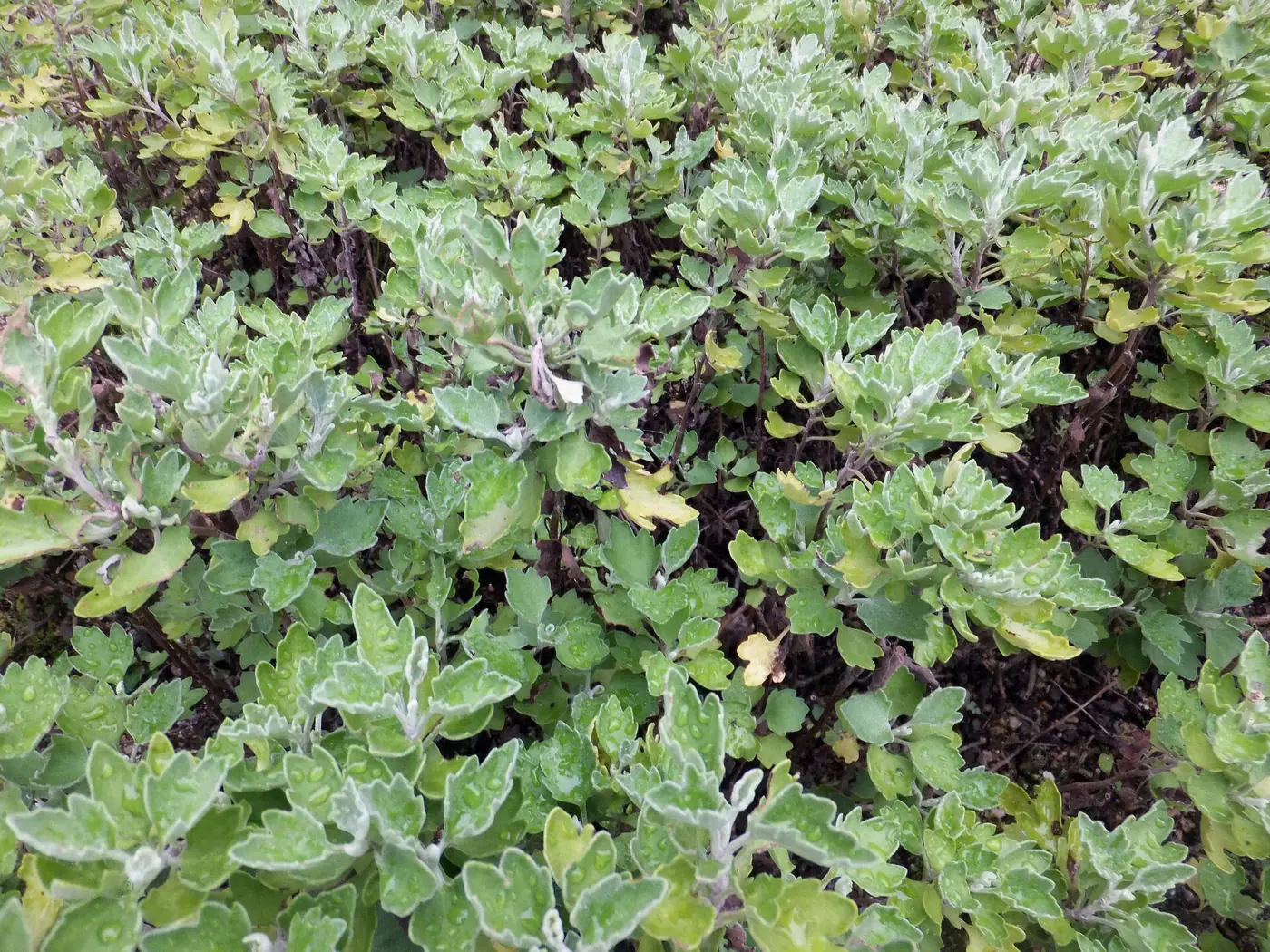
Autumn's chrysanthemum display, grown on site. Photo: Syrio, CC BY-SA 4.0, via Wikimedia Commons.
Koko-en Garden: Frequently Asked Questions
How much is entry to Koko-en Garden?
400 yen for the garden alone; 2,600 yen for the castle-plus-garden combo (against 2,900 bought separately). Both are sold at the garden gate and on the castle's official online seller. Children under 18 enter free, matching the castle's 2026 rule.
Is Koko-en Garden worth visiting?
For 400 yen and 30-40 minutes: easily - it is the domestic counterweight to the keep's military grandeur, with a working teahouse and nine distinct gardens on the residence's actual excavated foundations. The honest caveat: it is a modern (1992) scholarly reconstruction, not an Edo survivor, and reads best with that in mind or with a guide narrating it.
How long do you need in Koko-en Garden?
30-40 minutes at walking pace, an hour with the teahouse stop and photographs. Guided visits run 45-60 minutes. It is deliberately compact - nine small gardens, not one large park.
When is the best time to visit Koko-en Garden?
Mid-November for the maple garden at full colour - the garden's finest week - and late April for the wisteria trellis. Summer afternoons are its strategic advantage over the castle: shade, streams and the teahouse. Weekday afternoons are quietest.
Does the castle ticket include Koko-en Garden?
Only the 2,600-yen combo does; the plain 2,500-yen castle ticket does not. Among guided options, the castle-and-garden listings bundle both admissions, while the culture walk's garden inclusion depends on the option chosen at checkout - our comparison marks which is which.